Colour is the worst place to start. Underwater, reds and oranges drain away within the first few metres, and a yellow fish on one reef can look much like a yellow fish on another. Shape and behaviour survive the distortion. Learn five silhouettes — butterflyfish, parrotfish, wrasse, damselfish, surgeonfish — and you will have a working vocabulary for almost any shallow reef you ever swim over.
Start With the Silhouette
A mask narrows your field of view, and water magnifies and bends what you see, so outline is the most reliable clue you have. Ask four questions, in this order:
- Outline. A tall disc, a torpedo, a heavy loaf or a small oval?
- Movement. Does it glide, flap, jerk, hover or row itself along with its pectoral fins?
- Position. On the sand, in mid-water, stuck to a coral head, or tucked in a crevice?
- Company. Alone, in a pair, in a loose group or in a tight school?
That is usually enough to reach a family. Stripes, spots and colour come second, and they will eventually get you closer to a species.
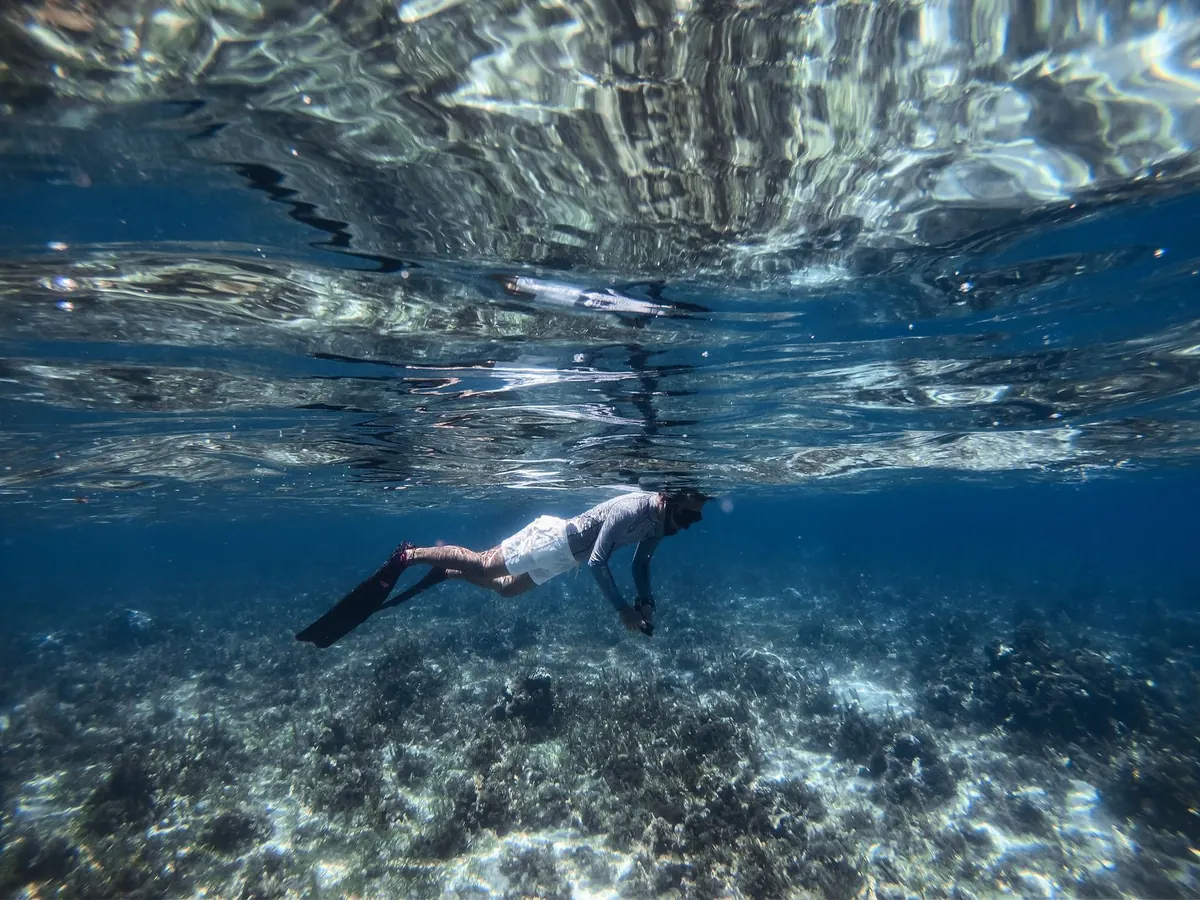
Stop swimming. Most reef fish ignore a snorkeller who floats still. Almost all of them flee one who chases.
Butterflyfish: The Hovering Disc
Short, deep and flattened, shaped like a dinner plate held on edge, with a small protruding mouth. Many species carry a dark band through the eye and a false eyespot near the tail — a decoy that makes the rear end look like the front. Plenty of them pair up and stay together, so two matched fish swimming within a hand's length of each other is a strong clue.
Behaviour giveaway
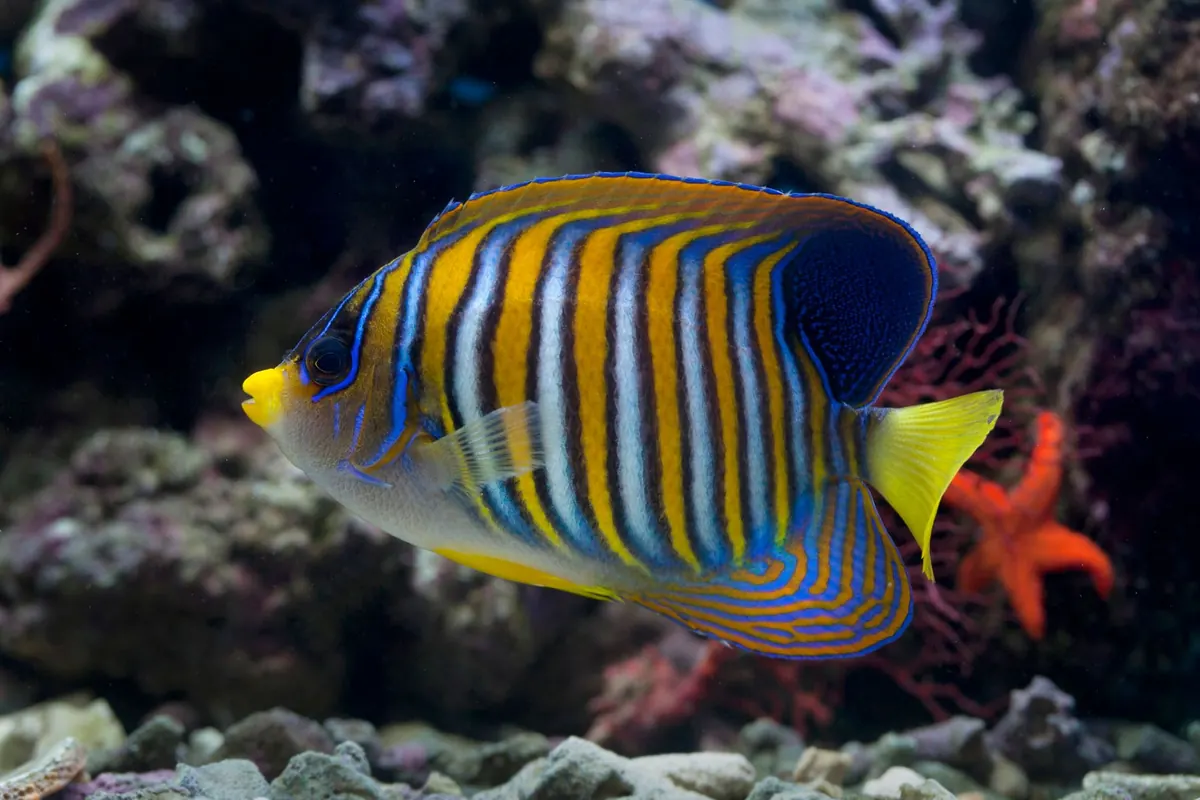
They hover, then peck. Watch one and you will see a slow flutter in one spot followed by a quick jab at coral, rock or sponge. They rarely bolt far, and often return to the same patch. Do not confuse them with angelfish, which share the outline but are larger and carry a heavy spine on the cheek, just below and behind the eye.
Parrotfish: The Chunky Grazer
A heavy, blunt-faced torpedo with large scales and bright patches is likely a parrotfish. Their teeth are fused into a beak that scrapes algae from rock and dead coral, which is why you sometimes hear a faint crunching while snorkelling. Watch for pale plumes of sand drifting behind a feeding fish: that is coral and rock, passed through the gut.
How it swims
Parrotfish row along with their pectoral fins, using the tail mainly to accelerate. Some live in harems of one large male and several smaller females. Colours vary wildly — drab greens and browns, electric blues, turquoises — and many species change sex and colour as they mature, so pattern matching alone can let you down. Go back to the blunt face and the chunky body.
Wrasse: The Restless Shapes
Wrasse are the family that refuses to settle on one shape. Slender and cigar-like, with a pointed snout and a long continuous dorsal fin, is the general picture, but juveniles rarely resemble adults and colours shift with age and sex. Look instead at how they move: busy, jittery, rarely still, darting into coral gaps and out again.
Cleaning stations
The easiest wrasse to identify is the cleaner wrasse: small, slim, often striped, hovering at a coral outcrop while larger fish queue up with fins spread. You may see it working along the flanks and gills of a grouper or a moray eel. Find a cleaning station, hold your position, and the whole sequence plays out in front of you.
Damselfish: Small, Bold, Territorial
Small ovals, usually a few centimetres long, hovering just above coral heads in loose groups. Damselfish are the ones that chase. Several species farm patches of algae, and they defend those patches against fish many times their size — and against you. If a tiny dark fish keeps darting at your mask from the same lump of coral, you have found a damselfish, and probably its garden.
They jerk rather than glide, hovering for a beat before a quick dash. Clownfish and anemonefish sit in this family too, which is a useful reminder that family is a broad category.
Surgeonfish: The Oval With a Blade
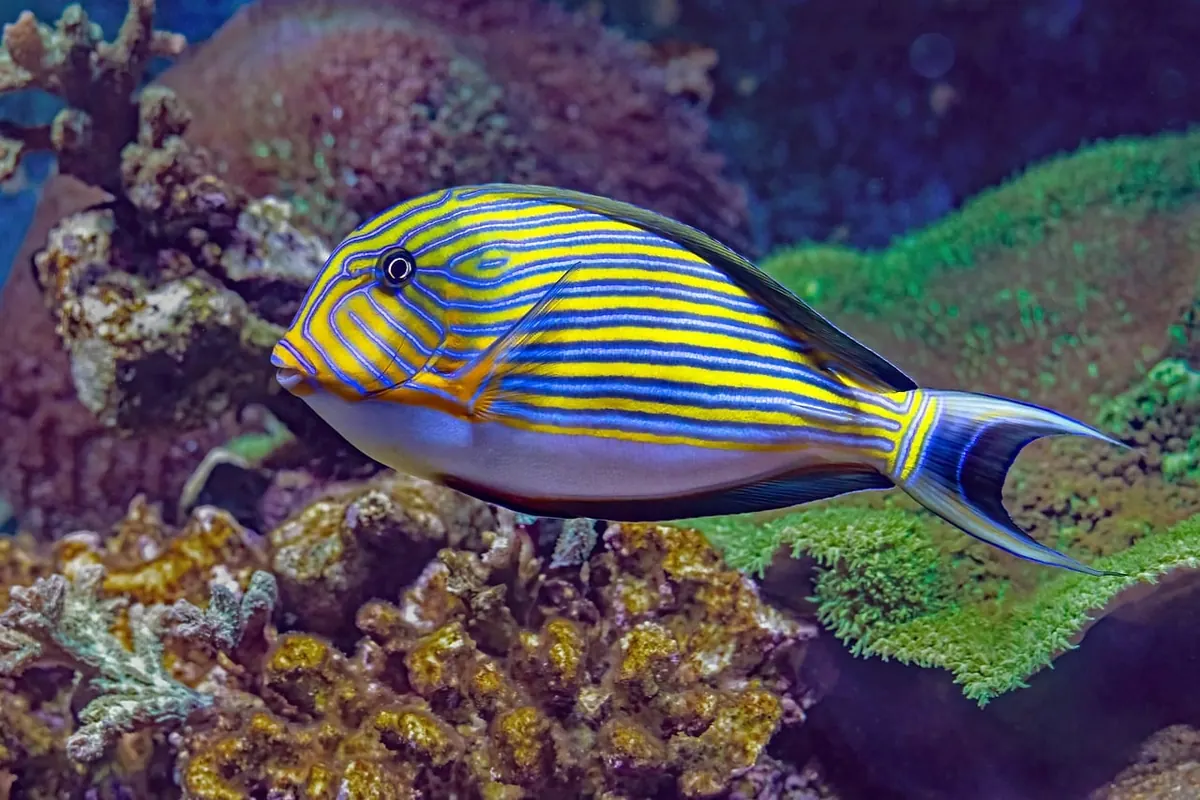
Oval, deep-bodied, small-mouthed, often in loose schools over shallow reef. The giveaway is at the tail base: surgeonfish, also called tangs, carry a sharp modified scale there, folded into a groove. Blue tangs, yellow tangs and powder browns all belong here.
Watch them feed. They graze algae from rock in steady, gliding passes, paddling with the pectoral fins and using the tail only to escape. Do not touch them. That tail spine can open a cut, and crowding a fish that cannot get away is poor reef etiquette in any case.
A Snorkel Method That Works
Pick one fish per swim and follow it. That single habit will teach you more than an hour of drifting over the reef looking at everything at once.
- Float still on the surface, face down, fins trailing. Do not kick.
- Scan for a silhouette and choose one fish — one, not a shoal.
- Watch it for at least thirty seconds before you decide what it is. Note how it moves and where it sits.
- Find one detail: eye stripe, tail shape, beak, tail base, cheek spine.
- Say the name out loud when you surface, or write it on a slate. Three identified fish is a good session.
Snorkel over patch reef and shallow lagoons rather than open water or drop-offs; the fish there sit shallower, calmer and easier to watch. Keep a metre of water between you and the coral, never stand on it, and never push your hands into a crevice. Check the current, tide and forecast before you get in, and swim with someone else rather than alone. A rash vest saves you reapplying sunscreen, and if you do use sun protection, choose a reef-friendly formula.
Finally, ask. Staff at a local dive shop, a dive guide or a reef conservation group can tell you which five fish are common on that reef this week. Arriving already knowing the likely cast makes everything else fall into place.
Photo: DavidClode / Pixabay