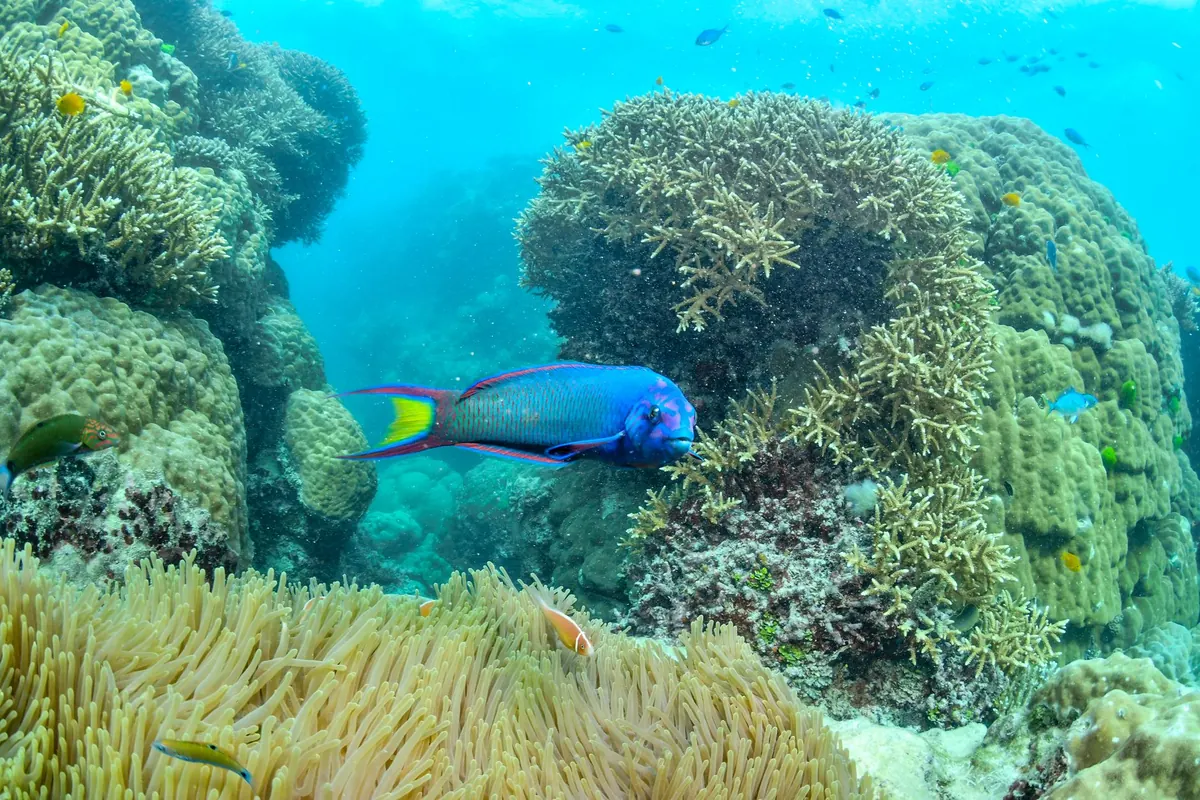
Dusk on a shallow reef is a good time to watch parrotfish. They drift into crevices, some species sealing themselves inside a clear mucus cocoon for the night, and the day shift ends. Come morning they are back at work: biting, scraping, crunching, and leaving a fine trail of sediment behind them. It is easy to file them under "colourful reef fish" and move on. That would be a mistake.
Built to graze
Parrotfish have fused teeth that form a beak-like plate, which gives them their name, plus a second set of grinding teeth in the throat. That combination lets them bite algae off rock and dead coral and then mill it down. The scraping is not delicate. Every mouthful takes a little of the reef's limestone with it.
Species differ in how much damage they do. Scrapers take thin layers off the surface. Excavators, including the big bumphead parrotfish and several of its relatives, bite off chunks and leave visible white scars. From the reef's point of view both are doing the same job: keeping algae short and opening bare surfaces where coral can settle.
Many parrotfish also change sex as they grow, starting life as females and later becoming males, often with a shift in colour and pattern. Removing the largest individuals therefore takes out the fish producing the most offspring, which is why a simple headcount can flatter a population that is actually in decline.
The sand factory
A large share of the fine white sand on tropical beaches began as coral skeleton, and parrotfish are part of the reason. They bite off coral and rock, grind it in the gut, and pass it out as sediment. Bumphead parrotfish, which travel in schools and can exceed a metre in length, are among the most prolific producers.
On a reef where coral is growing, that erosion is balanced by new growth. Where corals have died and are not being replaced, the balance tips: the sand keeps coming, but the structure it came from is disappearing.
Grazing keeps algae in check
Algae and coral compete for light and space. On a reef with enough herbivores, algae are cropped back and corals hold their ground. Take the grazers away through overfishing and fleshy algae can spread across dead coral and rubble, making it harder for coral larvae to settle. Reefs can shift into an algae-dominated state that persists for years, even if water quality improves later.
Parrotfish are not the only herbivores doing this work. Urchins, surgeonfish and rabbitfish all pitch in, and on some reefs they carry most of the load. But parrotfish are often the largest and most mobile grazers, covering ground that smaller fish and urchins do not.
Why they make useful indicators
A good indicator species is easy to spot, responds quickly to pressure and tells you something specific. Parrotfish fit all three. They are visible on daytime dives and snorkels, they are targeted by fishers, and their size distribution says something about how heavily an area has been fished.
What matters more than a total count is the shape of the population. A reef with plenty of small parrotfish and few large ones is a very different place to a reef with a full spread of sizes. Where traps, nets or night spearfishing are used, the big excavating species tend to disappear first: they are the most valuable, they mature slowly, and fish resting in crevices are easy targets. That is why herbivore biomass and the presence of large-bodied species are used when reefs are assessed.
A quick note on limits
Parrotfish alone will not tell you everything. A reef can hold healthy numbers of them and still be in trouble from bleaching, disease or poor water quality. Treat them as one signal among several, alongside coral cover, the amount of bare substrate and the presence of juvenile corals.
Reading a reef: what to look for
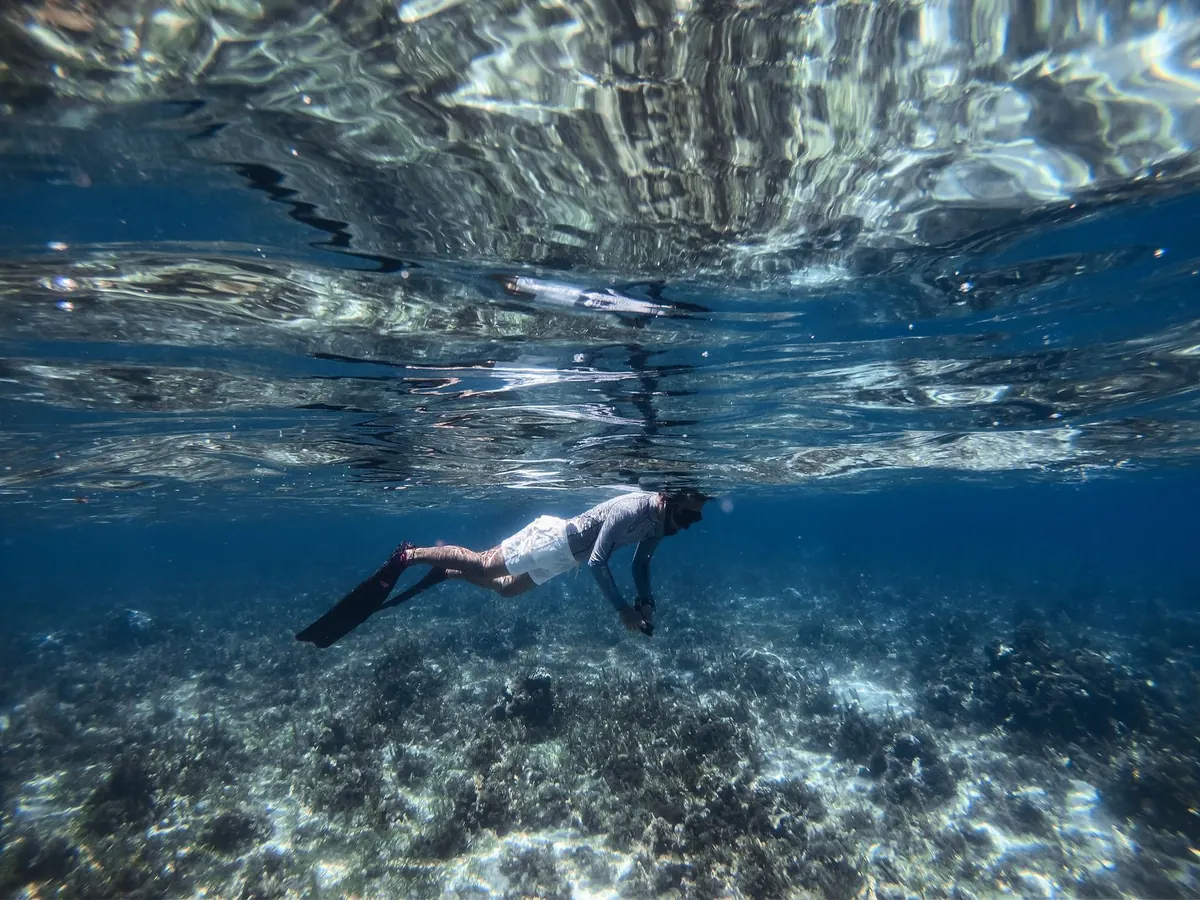
Next time you are in the water, spend ten minutes on a rough survey rather than swimming straight past. Useful things to note:
- Size range. Are there a few big parrotfish, or only small ones? Large individuals of excavating species are a good sign.
- Species variety. A mix of types, plus the occasional bumphead, suggests a reef under less fishing pressure.
- Grazing scars. Fresh white bite marks on rock and dead coral mean fish are feeding here now.
- Algal cover. Long, fleshy seaweed on hard reef, rather than short turf, points to grazing that is not keeping up.
- Behaviour. Fish that hold their ground while you watch are usually less hunted than fish that bolt.
If you dive the same site regularly, note these things roughly and compare. A pattern over a year or two is far more useful than a single snapshot, and local reef groups often welcome sightings records.
What puts parrotfish under pressure
Fishing is the main one. Parrotfish are caught for food across much of the tropics, and because many species live for years and mature slowly, populations recover slowly too. Habitat loss follows close behind: when coral dies, both the food supply and the structure the fish shelter in shrink. Sediment and nutrient runoff from cleared land, poorly managed coastal development and inadequate sewage treatment all degrade the reef flats where parrotfish feed.
Night spearfishing deserves a mention. A fish asleep in a crevice is an easy target, and taking the larger individuals that way can strip a reef of its most productive breeders very quickly.
Small choices that help
You do not need to be a marine biologist to make a difference.
- Keep your distance and do not chase fish for photographs. Never corner or touch a resting parrotfish at night.
- Do not feed fish. It changes their behaviour and can spread disease.
- Choose dive and snorkel operators who brief on buoyancy and who do not anchor on reef.
- If you eat seafood, ask what is local and under pressure, and avoid parrotfish and other reef herbivores where they are heavily fished. Local conservation groups usually know which species to leave alone.
- Support marine protected areas and no-take zones, and volunteer with reef survey projects if you live near the coast.
- Cut what reaches the sea from land. Sediment, fertiliser, soap and sewage all end up on the reef flat.
One small fish grinding coral into sand is unremarkable. Millions of them, on a reef that is still growing, are a different proposition. Looking after parrotfish is not sentimentality — it is looking after the machinery.
Photo: Martins OPO / Pexels